Ten Months, Two Marathons, One Big Lift
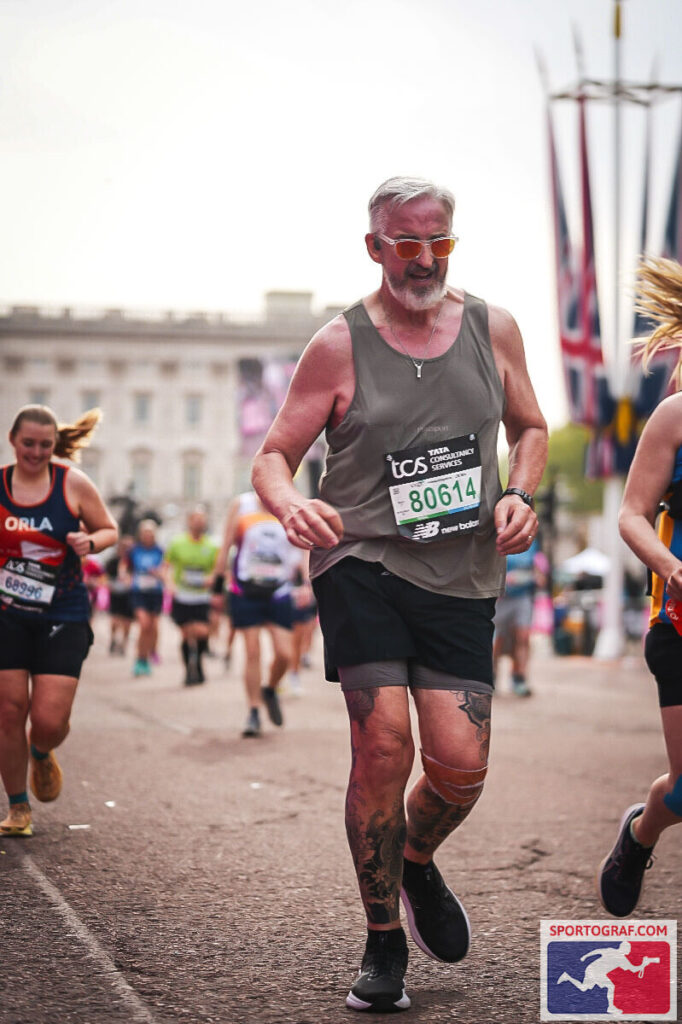
In the ten months between 2 November 2025 and 29 August 2026, I ran my first two marathons and, for good measure, deadlifted a shade over 140 kg, which puts me in the advanced category for my age group. I ran the marathons at 68, and I was 69 when the big deadlift came off the ground. I’m just over 6’4″ and weigh 101 kg, so I’m not your typical runner. Regular readers will know about my injuries. All in all, a decent few months. So: now what?
I’d never run a marathon. Decades ago I trained for one, but my knees gave out, and that was that. An orthopaedic consultant told me I was too big to run, and I believed him. Five years ago, another expensive consultant told me my future held steroid injections and then a knee replacement. So I started running. I ran my first 5k in October 2024, and the obvious next step was a marathon: New York, 2025.
I set myself a target of 5:45 in New York, the average major-marathon finish time for my age group, and I finished seven minutes inside it. Five months later, I aimed for 5:29 in London and ran exactly that. That’s one of the quiet pleasures of getting older: there’s always an age-group benchmark that tells you whether you’re holding your own. And the older you get, the smaller the group becomes, and that’s an oddly elite feeling, a guilty pleasure.
I’ll always remember my metronomic pace in New York, making light of the fabled 21-mile wall, where runners all around me were collapsing. I’ll always remember London humbling me, and me walking around mile 16 and seriously thinking about calling it a DNF.
Looking back, I wonder how much of the fuel came from those consultants. Two experts told me to stop, and I set out to prove them wrong. Opposition is easy to run on. I remember having this stubborn streak as a kid. Tell me I couldn’t, and chances were I would find a way to.
The Big Lift
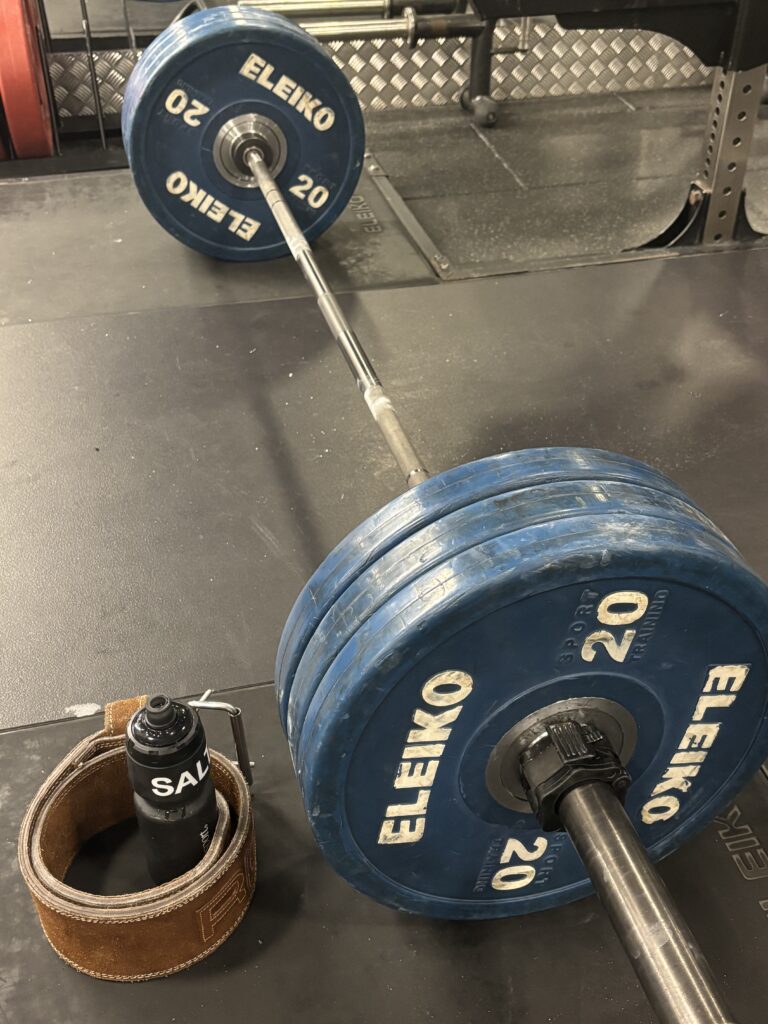
While my toenails grew back, I went to the gym. Shoulder damage, including a titanium plate, rules out much bench pressing, so I chose the deadlift. For a tall man the bar has a long way to travel, but I can lift without a spotter, which suits me, because I like to lift alone. I worked up gradually: short, explosive efforts, an entirely different mindset from three-hour long runs. The plan was 140 kg by the end of December. By May I was lifting 135. I left the bar alone for a few weeks, came back in July, and by August I was making good progress.
On the last weekend of August I felt strong and planned to lift 135 again. Loading the bar, for reasons I still can’t explain, I loaded the bar to 140 kgs, plus the collars. If it left the ground, the job was done, months early.
I tightened my belt, chalked my palms, took a deep breath and dropped to the bar. Lats engaged, no messing. I drove my legs through the floor and the bar came up. My legs and lower back were fine, but my pecs felt as if they were about to tear. Still, the bar was up. I held it, looked at myself in the mirror, nodded, and lowered it slowly. Then I dropped to one knee, light-headed.
Done. Now what?
Now What? – Next
This is the hard part. Since August my training has been sporadic. I’ve put on a couple of kilos. I’m sleeping worse. I’ve stopped taking supplements and my protein intake has dropped. I’m a bit lost. I’m goal-driven, and without a goal my motivation to train has evaporated. People suggest a parkrun or a half-marathon, and neither does anything for me. Go big or go home has always been my rule. Having run a marathon, why run half of one?
Training is central to how I want to live the rest of my life. I don’t want to live forever, but I want the years I have left to be active, not spent shuffling around or sitting on my backside watching Netflix. That alone should get me moving. It does, up to a point, and my weight, blood pressure and sleep all say that point isn’t far enough.
Here’s the odd thing. My osteopath, who is very good, says my body has probably had enough of months-long training blocks. Good friends tell me I have nothing left to prove to anyone. They’re kind, and they’re probably right, and I find kindness much harder to push against than a consultant telling me I can’t. But I can’t stop asking now what?
For as long as I can remember, a permanent fight-or-flight has lived in me. If I don’t keep moving forward, the bad things will happen. Family life wasn’t the best, and I lacked male role models, and there was always an impending sense that things weren’t going to end well. Maybe it comes from there, hard-wired early.
Now What? – Good Things Are Happening
But I’m a fortunate man, with a good life, good health and no money worries. One part of me says that’s luck. Another part says it’s the drive: I’ve never sat back and let the world happen to me. Both are true, and both are false. The drive built things, but it was never really about the things. It was about keeping the bad things at bay, and the bad things don’t care how many marathons you’ve run.
It has led me to big moves before, and not always physical ones. It made me leave a comfortable senior corporate role to start a business from scratch. More recently it pushed me to learn a musical instrument and to write an 85,000-word crime novel. Each time, the satisfaction lasted a while, and then the question came back.
I should understand this better than most. I studied clinical organisational psychology at INSEAD, then spent years coaching senior executives and teams at major business school programmes. I can’t count all the times I’ve worked with executives who described my issue exactly. Achievement brings short relief, then the itch starts again. And I’d ask them whose voice says it isn’t enough? Or what do you think happens if you stop? Turns out that I’m not that good at asking myself those questions.
Meanwhile, something else has been happening that I nearly left out of this post, because it didn’t seem to count.
After a lifetime of depression and anxiety, I’ve come off medication for the first time in more than a decade. More on that in my next post. I’ve meditated every day for over five weeks. None of this has a finishing time or a weight on the bar. It’s slow and quiet, and you can’t post it on Strava. It is also the opposite of fight-or-flight.
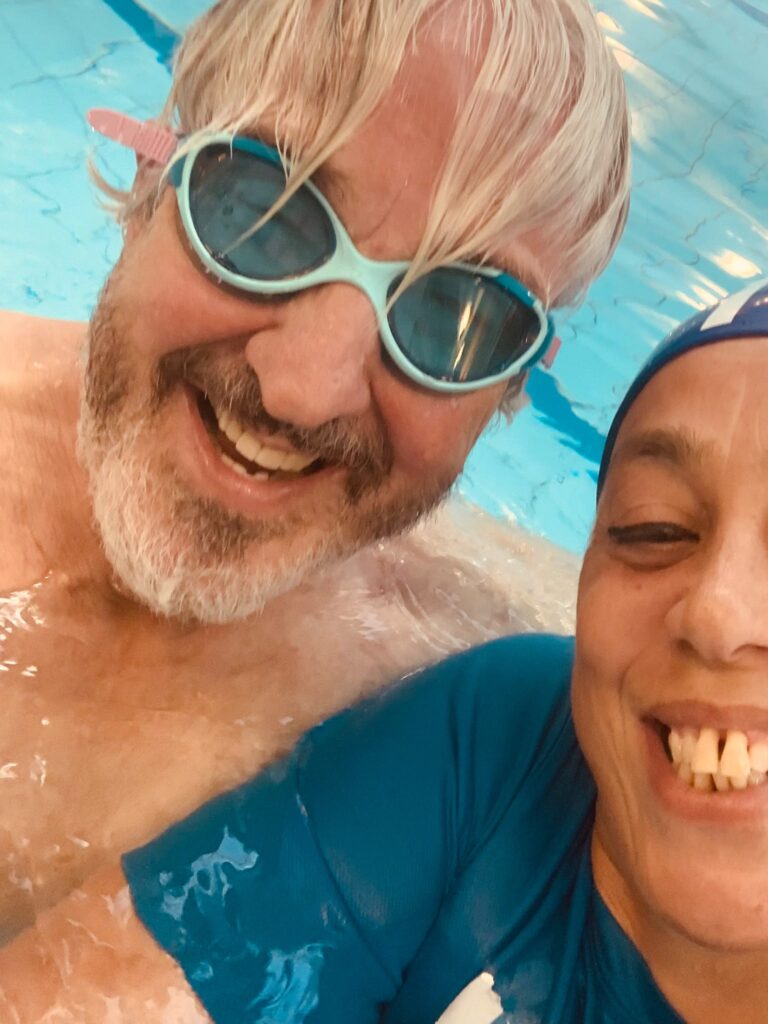
And I’ve started swimming lessons. I’ve been afraid of water since I was a child, and I can’t swim. I have run 26.2 miles through two of the world’s great cities, and I’m frightened in a swimming pool.
I didn’t count swimming as my next challenge because it doesn’t look big. There’s no medal, no age-group table, nobody to impress. But big, for me, has always meant visible and measurable: a time, a weight, something to prove to someone. Swimming a length proves nothing to anybody, and it’s the most frightening physical thing I’m doing.
Maybe go big or go home can be measured in fear rather than in miles or kilograms.
Or maybe the real challenge is the one I keep avoiding: training, sleeping and eating well with no target at all, simply because it’s good for me. For a man wired the way I am, that might be the hardest thing I’ve attempted.
I don’t know yet. I’ll tell you when I’ve swum a length. I’m close to nailing my first width, though.
You should do Swim Serpentine next year. Two mile swim
Aquaman in the making?! 1% better everyday and you’re nailing it
Why is swimming a length not a huge target?. You conquer your fear. And prove something to your biggest critic/judge – I.e yourself. So a massive achievement. Good
Luck.