It Matters More With Each Year
My 2026 goals: I’m raising the bar. Next year I turn sixty-nine, and instead of easing off, I’m deliberately making things harder.
The plan is simple on paper: two major marathons, not one, and a clear step up in strength. I want to be able to pull five clean reps of a 125kg deadlift, or squat 100kg for five with control and confidence. Not as a party trick. Not for social media. But because those targets represent something I care about far more than numbers: they make me harder to break.
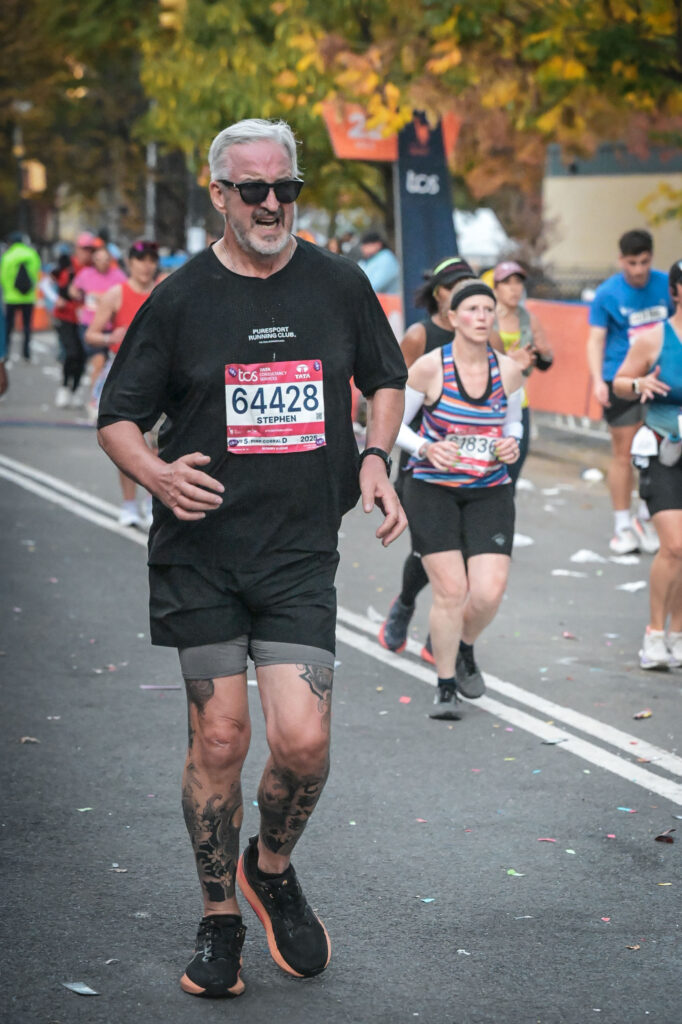
I know these goals are hard, and there’s a decent chance I won’t get them done. But the process to get them done is the real reward, and the events themselves are the measuring stick of my progress.
At this stage of life, being harder to break is freedom. It’s resilience. It’s the difference between a body that can absorb stress and one that fractures under it. I don’t want to be one of those people who stops doing things because they’ve become fragile.
As always, my disclaimer: I don’t want to live forever, and I’m not in denial about my age—I’m an old man. But I do how some choice as to the quality of the fourth quarter of my life. I know that better physical condition means a higher quality of life. Being the oldest guy in the gym, wearing out and not rusting out in an armchair.
I didn’t arrive at these goals in a vacuum. They’re the logical continuation of what happened in 2025, when, at sixty-eight, I ran a marathon in 5 hours and 38 minutes, finishing inside my target time of 5:45. That experience reshaped how I think about ageing, training, and what’s realistically possible for older bodies when we stop treating decline as inevitable.
But this isn’t really a story about last year’s race. It’s about why I’m choosing to push forward now—and why that choice has implications far beyond finish lines or gym lifts. I’m raising the bar because I believe it will improve the quality of my life, not the length of my life.
Why People Keep Telling Me This Is Unusual
One of the most unexpected parts of the past year hasn’t been the training itself, but the reactions to it.
People regularly tell me what I’m doing is rare. Some say it with admiration. Others say it with disbelief. The odd ones look at me as the crazy old man. Quite a few follow it with a pause, then something more reflective, commenting on a parent’s health and lifestyle.
They’re not wrong. Statistically, what I’m doing sits a long way from the norm.
Only a tiny fraction of men run marathons at all in a given year. Filter that group by age, and it shrinks dramatically. Filter again by height and weight—6’5”, around 100kg—and it becomes smaller still. Add in a recent history of injuries, arthritis, and the accumulated wear of decades of activity, and you’re looking at a sliver of a sliver.
That rarity isn’t something I chase, but I don’t ignore it either. Because when people respond this way, what they’re often reacting to isn’t the marathon or the barbell. It’s the underlying idea that physical decline after sixty is optional to a much greater degree than we’ve been led to believe.
And that idea matters. I’m not setting myself up as some superior, smug guy. That’s not the intention at all. Rather, I’m saying we have a choice, and I’ve made mine. I was less than average at sport as a kid, but as an old man I’m in the top few percent of my age group, not because I’m a great athlete; but because I’m still here, still doing it, consistently. Because I believe it’s a much better lifestyle than the alternative.
2025: Proof Of Concept, Not A Victory Lap
When I ran the New York Marathon in 2025, the time itself—5:38—was satisfying, but it wasn’t the most important outcome. What mattered was how I arrived at the start line.
I’d lost 12.5 kilograms. I’d rebuilt consistency after injury. I’d combined endurance work with regular strength training, daily mobility, sensible supplementation, and—crucially—enough rest to allow adaptation rather than breakdown.
For the longest time, I wasn’t sure I could finish a marathon, and I probably bored friends to death saying that. It was the process leading up to New York that mattered. Steady and consistent, with the reward being better health. It’s worth saying that I went through all my preparation uninjured, testament to the low key but consistent training. I didn’t overreach, even when I felt good. And many times I went out for a run when I really did not feel like it.
The race wasn’t an act of defiance against age. It was evidence that the system worked.
At sixty-eight, I didn’t feel like I was borrowing fitness from the future. I felt like I was investing in it.
That distinction is everything.
Why I’m Doubling Down At 69
It would be easy to treat that marathon as a closing chapter. A “one last time” story. That narrative is familiar, comforting—and deeply misleading.
I crossed the finish line in New York and within minutes said to myself, “I’m doing another.” Because I knew I was better for the months of training.
Physiologically, the body doesn’t respond to birthdays. It responds to stimulus. Aerobic capacity declines fastest in people who stop using it. Strength disappears quickest in those who avoid load. The downward curve isn’t driven by age alone; it’s driven by disuse.
That’s why next year isn’t about maintaining. It’s about progression. I’m raising the bar. And not just a little.
Two marathons force me to stay aerobically honest. They require consistency, not heroics. The strength targets force me to keep loading bone, muscle, and connective tissue in ways that directly oppose sarcopenia and frailty.
Together, they form a deliberate counterweight to the biology of ageing.
The Argument No One Likes Talking About
There’s a reason this matters beyond personal satisfaction.
Cardiorespiratory fitness is one of the strongest predictors of all-cause mortality we have. Not cholesterol. Not weight alone. Fitness. People with higher aerobic capacity live longer, full stop. The difference between low fitness and high fitness can translate into a 50–70% difference in mortality risk. Here’s a peer reviewed paper on the subject.
Strength tells a similar story. Measures of muscular strength—sometimes as simple as grip strength—predict lifespan, fall risk, and recovery from illness. Resistance training two or three times a week is consistently associated with lower death rates, independent of cardio. Here’s a peer reviewed paper on the subject.
This isn’t motivational rhetoric. It’s epidemiology.
When people tell me they wish their parents would pay attention to physical health, what they’re really saying is that they’ve seen the alternative. They’ve seen how quickly life narrows when strength disappears and breathlessness becomes normal.
What I’m doing now measurably shifts those odds. That’s why I’m raising the bar.
I’m not delusional. Father Time is undefeated, and one day he’s coming for a chat with me. But I can make a positive choice to ensure that the days between now and that conversation are of the highest quality.
Bigger, Older, Battered – And Doing It Anyway
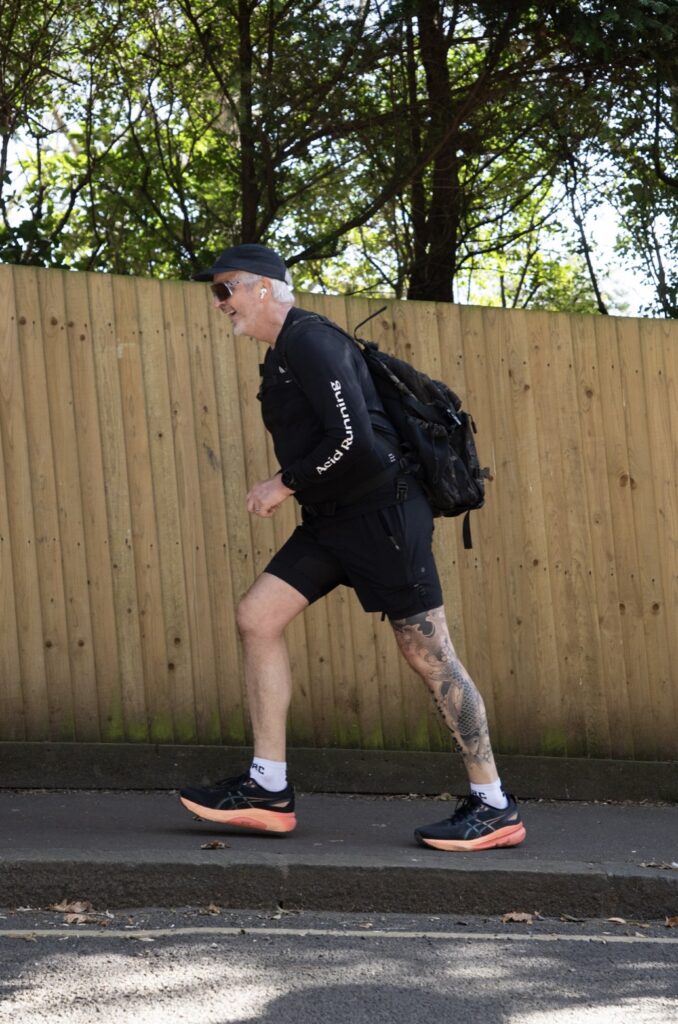
At 6’5” and around 100kg, I don’t have the frame of a typical endurance runner. Every step carries more load. Every mistake costs more. Add in a history of cycling accidents, joint issues, and the slow creep of arthritis, and caution becomes non-negotiable.
That’s why this approach works. I don’t train to impress. I train to repeat. And I’m raising the bar, consciously adding to the training load.
Weight loss wasn’t cosmetic. Dropping 12.5kg reduced joint stress and inflammation, improved running economy, and made consistency possible. Strength training didn’t compete with running; it protected it. Mobility work didn’t make me supple; it kept me functional.
And rest—often misunderstood as weakness—became a tool. At this age, recovery is where gains are earned.
Why Inspiration Matters: Even If That’s Uncomfortable
I’m cautious about the word “inspiration.” I’ve been told what I achieved in 2025 is an inspiration. As a weapons-grade introvert, the label makes me curl up in embarrassment. But I’ve come to accept that if people see what I’m doing and reconsider their own relationship with movement, that matters. If one person laces up a pair of trainer or clocks in at the gym because they’ve listened to my message, job done.
I don’t think people of my age should run marathons. Or start slinging an Olympic bar around at the local gym. Most shouldn’t. But even walking with intent, or treating their physical health as something they can still influence, rather than something already decided, is a huge win for them.
If someone sees this and thinks differently about their own ageing—or nudges a parent, a partner, or a friend to do the same—then the ripple effect is larger than any race result.
It’s important to remember I am not an athlete. Older people can’t look at me and say, “It’s okay for him, he’s athletic.” – because I’m not. I’m just a guy who started on one spot and said “I think if I do this consistently, I can get to that spot. And feel better for it.”
The Point Of All Of This
As I head into my sixty-ninth year, I’m not chasing youth. I’m building robustness. I’m widening the margin between myself and decline.
Last year showed me what was possible. Next year is about extending that logic, calmly and deliberately.
It’s not going to be easy. 2025 saw me clock up over 1,000 kms of running, another 200 km on a WattBike and more than forty gym sessions. Next year I need to recover from an April Marathon, then prepare for Berlin in September. And I need to do a better job in the gym; as the road miles went up this year, the reps in the gym went down. I can’t do that again, remaining injury free on the road was due to gym work.
I am clear that this isn’t about mindset alone. It’s about physiology, statistics, and probability. Training this way doesn’t guarantee anything—but it materially improves the odds of living longer, staying independent, and remaining capable well into older age.
And for me, that’s reason enough to keep raising the bar.